

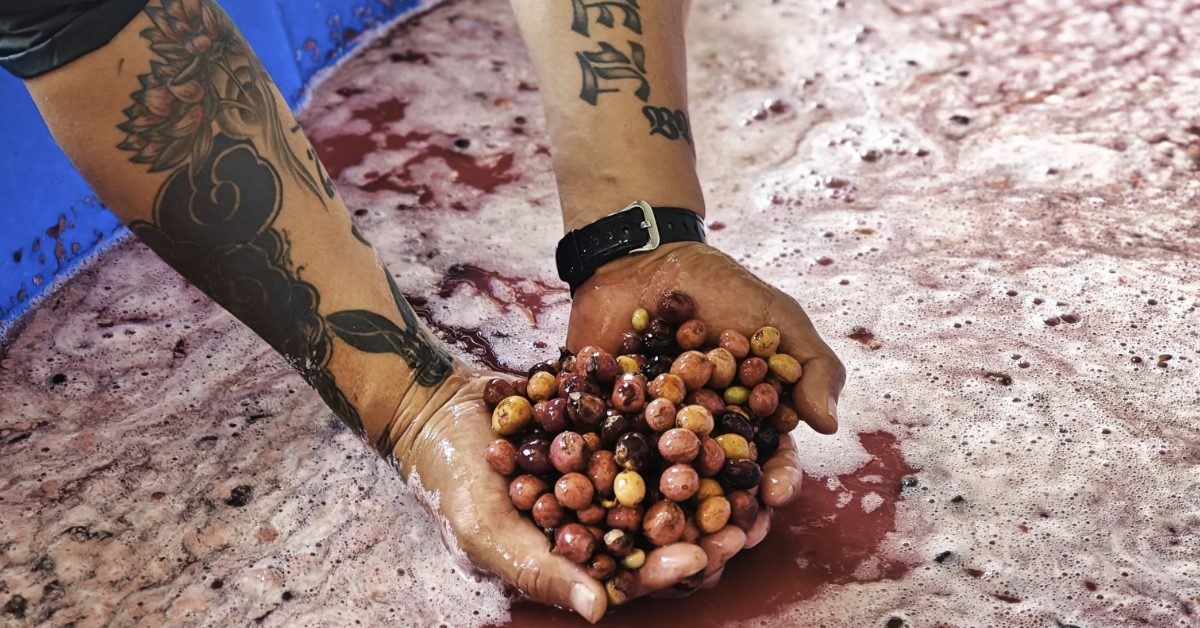
Vietnam is one of the most important coffee-producing countries in the world.
Yet for many coffee drinkers, its story remains largely untold.
Today, Vietnam is recognized as the world’s second-largest coffee exporter. Vietnamese coffee can be found in cafés, grocery stores, specialty roasteries, and homes across the globe. But the journey that brought coffee to Vietnam is far more complex than production numbers alone.
It is a story shaped by geography, agriculture, resilience, family traditions, and generations of farmers who transformed coffee into something uniquely Vietnamese.
To understand modern Vietnamese coffee, you first have to understand how coffee became part of Vietnam itself. And if you are new to the category, our guide on what makes Vietnamese coffee different is a helpful place to start.
The Arrival of Coffee in Vietnam
Coffee was first introduced to Vietnam during the French colonial period in the mid-1800s.
French missionaries brought coffee plants into the country, initially planting them in northern regions before cultivation gradually expanded southward. Over time, coffee proved well suited to Vietnam’s climate and geography, particularly within the country’s mountainous highland regions.
What began as an imported crop eventually became deeply rooted in Vietnam’s agricultural identity.
Farmers throughout the Central Highlands discovered that the combination of volcanic soil, rainfall, elevation, and tropical conditions created an ideal environment for coffee cultivation. As production increased, coffee became an increasingly important part of Vietnam’s economy and rural communities.
Few could have predicted just how significant the crop would eventually become.
The Rise of the Central Highlands
Today, when people think about Vietnamese coffee production, many of the country’s most important growing regions are located within the Central Highlands.
Areas such as Buôn Ma Thuột, Đà Lạt, Cầu Đất, and Langbiang have become deeply connected to Vietnamese coffee cultivation.
Each region offers something unique.
Buôn Ma Thuột is internationally recognized for robusta production and has played a major role in establishing Vietnam’s position within the global coffee industry.
Meanwhile, higher-elevation regions around Đà Lạt and Cầu Đất have become known for producing exceptional arabica coffees with refined acidity, floral aromatics, and layered sweetness.
The diversity of these growing regions is one of the reasons Vietnamese coffee continues to surprise people who assume all coffee from Vietnam tastes the same.
In reality, the country’s coffee landscape is remarkably diverse.
How Coffee Became Part of Vietnamese Culture
While coffee became an important agricultural product, it also became something much more personal.
Over time, coffee found its way into daily Vietnamese life.
Cafés became gathering places. Families developed brewing traditions. Coffee evolved from a crop into a cultural ritual.
One of the most recognizable symbols of Vietnamese coffee culture is the phin filter, a simple metal brewing device that slowly drips coffee into a cup below.
The phin encourages patience.
There are no buttons to press. No complicated machines. Just coffee, hot water, and time.
That slower approach to brewing reflects something deeper about Vietnamese coffee culture. Coffee is often viewed as an experience rather than a task. It creates space for conversation, reflection, and connection.
If you want to experience that ritual yourself, our complete brewing guide includes recommended ratios, grind sizes, temperatures, and methods for phin brewing, pour over, French press, espresso, and cold brew.
For many Vietnamese families, coffee is intertwined with memories of parents, grandparents, relatives, and friends gathering around a table and sharing stories over a slowly brewed cup. If you are specifically interested in the traditional phin method, we also created a step-by-step guide on how to brew Vietnamese coffee at home.
In that way, coffee becomes part of the rhythm of daily life.
The Robusta Story
Much of Vietnam’s growth as a coffee-producing nation was built upon robusta coffee.
Robusta thrives in Vietnam’s growing conditions and offers strong yields, resilience, and distinctive flavor characteristics.
As global demand for coffee increased throughout the twentieth century, Vietnam became one of the world’s leading robusta producers.
Unfortunately, this success also created a misconception.
Many consumers began associating robusta with lower-quality coffee, leading them to overlook the complexity and potential found within carefully cultivated robusta lots.
But coffee producers throughout Vietnam continued refining their craft.
Today, specialty-grade robusta is helping challenge outdated assumptions. Fine robusta coffees are gaining recognition for their sweetness, body, chocolate notes, spice characteristics, and overall complexity.
Rather than viewing robusta as a lesser coffee, many producers are demonstrating what it can become when quality takes priority.
The Specialty Coffee Movement Changes Everything
Over the past decade, Vietnamese coffee has entered a new chapter.
Across the country, producers have begun investing heavily in quality-focused cultivation and processing methods. Experimental fermentations, improved drying techniques, micro lots, competition coffees, and innovative cultivars have created entirely new opportunities for Vietnamese coffee to shine.
Specialty coffee professionals around the world are beginning to take notice.
The conversation is slowly shifting away from quantity and toward craftsmanship.
Coffee buyers are discovering remarkable arabica lots from Đà Lạt. Roasters are exploring fine robusta. Producers are receiving recognition for coffees that compete on an international level.
What many people are seeing today is not a sudden emergence of quality.
It is the recognition of quality that has been developing for years.
Preserving the Story Behind the Coffee
At Triều Đại Coffee, we believe the history of coffee in Vietnam is ultimately a story about people.
It is about farming families carrying generations of agricultural knowledge.
It is about producers pushing boundaries while respecting tradition.
It is about communities shaped by coffee cultivation.
And it is about preserving cultural identity through something as simple as sharing a cup of coffee.
Too often, coffee is reduced to tasting notes, brewing methods, and caffeine content. While those things matter, they only tell part of the story.
Every coffee also carries the story of where it came from.
The landscape.
The harvest.
The farmers.
The traditions.
The history.
The Future of Coffee in Vietnam
The future of Vietnamese coffee looks incredibly promising.
Producers continue to innovate. Specialty coffee continues to grow. More consumers are becoming curious about origin and craftsmanship. And the world is slowly beginning to recognize Vietnamese coffee for what it has always been capable of becoming.
Not simply a source of volume.
Not simply a commodity.
But a respected coffee origin with its own unique identity, culture, and voice.
At Triều Đại Coffee, that story is at the heart of everything we do.
Because every cup of Vietnamese coffee carries something larger than flavor alone.
It carries a legacy.
The story of Vietnamese coffee continues to evolve, shaped by farmers, producers, and a new generation of specialty coffee professionals. At Triều Đại Coffee, we are proud to share coffees that honor that legacy while helping more people experience Vietnam’s remarkable coffee culture.